)


)
)
Bitcoin Casinos in Canada 2026: How Crypto Deposits, Provincial Rules and Instant Payouts Actually Work
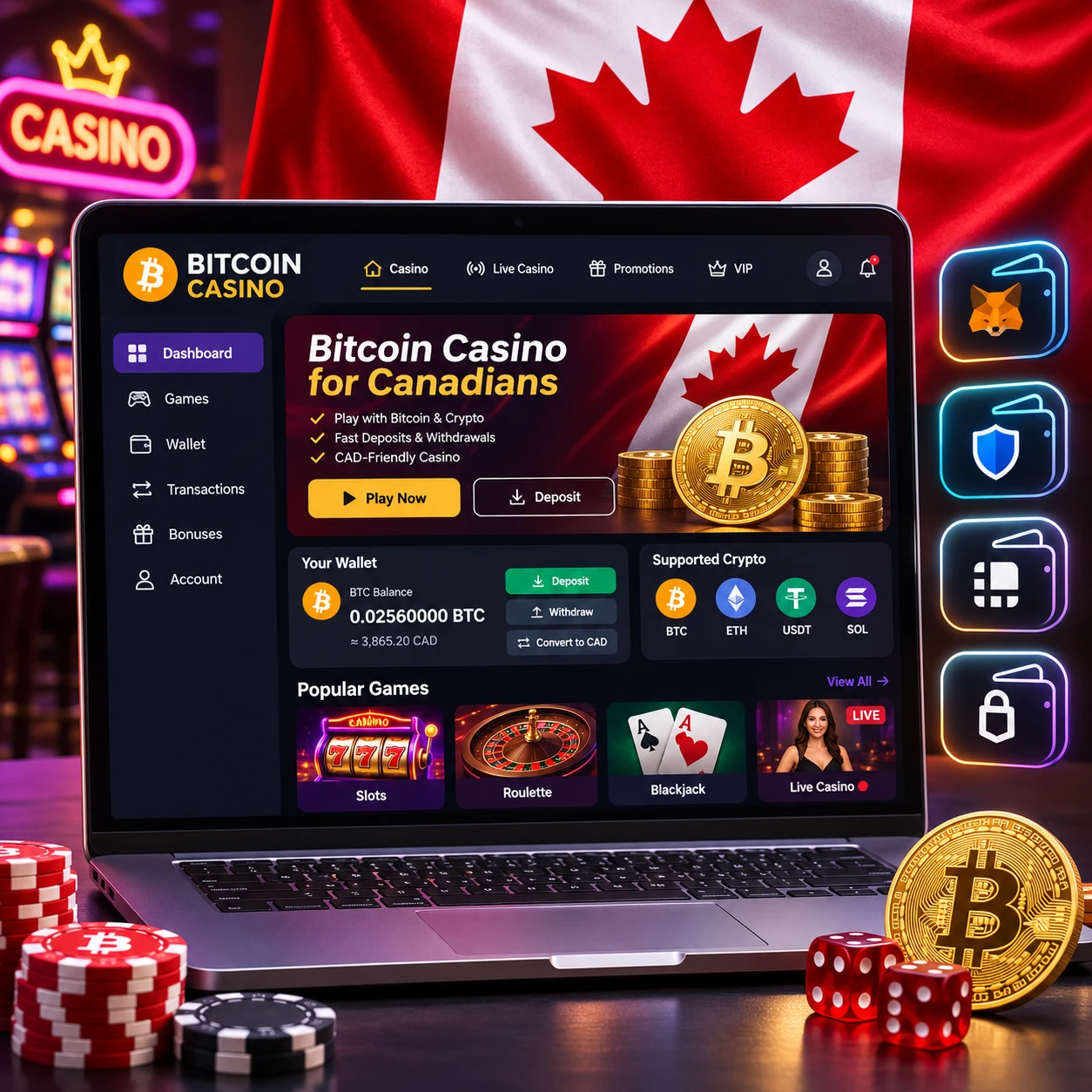
Something shifted in the last couple of years, and I don't think most players have caught up to it yet. Bitcoin casinos in Canada used to feel like a side door attached to a sportsbook — a novelty tab where you could deposit BTC if you were curious enough. In 2026 they're their own product category. Separate deposit rails. Separate cash-out speeds. Separate legal questions that depend entirely on which province you happen to live in.
I've spent a lot of time in this space, and I've noticed that players really only care about three things. How does the money get in? Is my province okay with this? And is 'instant payout' a real thing or a marketing sticker? Those are the three questions I want to answer here, without the hype. No 'revolutionary gaming experience' language. Just the mechanics, the rules, and the parts that actually cost people money. And because the market is fragmented enough that no single operator deserves blind trust, I'll finish by pointing you toward how to compare them properly.
What a Bitcoin Casino Actually Is in 2026
Strip away the branding and a crypto casino is an online casino where cryptocurrency is the primary banking layer, not an afterthought bolted onto Interac and Visa. Bitcoin is still the default, but the interesting growth is elsewhere: Lightning Network for small fast deposits, USDT on Tron or Ethereum, and various layer-2 networks that settle in seconds for fractions of a cent.
The other split that matters is the games themselves. Most crypto casinos run two very different product lines under one roof. First, provably fair originals — crash, dice, plinko, mines — where the outcome is generated from a seed you can verify yourself after the fact. Second, licensed slots and live dealer tables, often from the big studio providers, where you're trusting a licence and an RNG audit rather than a hash you can check. Both are fine. But they're different kinds of trust, and a site that's excellent at one can be mediocre at the other.
Custodial Accounts vs. Direct Wallet Deposits
There are two banking models and they behave nothing alike. In a custodial setup, you hold a balance on the site, topped up from an exchange or wallet. It feels like a normal casino account, withdrawals are usually processed in batches, and the operator controls the keys — which means they can freeze, delay, or reverse a payout while they 'review' it. Recovery is easy if you lose your password, because they hold the account.
Direct wallet deposits work differently. You get a per-player address, you send to it, and funds land in your casino balance. Some sites skip the hosted balance entirely and settle each bet from your connected wallet. Fewer hoops, but also less protection: send to the wrong network and nobody is obliged to help you, because there's no intermediary to appeal to.
How Crypto Deposits Work, Step by Step
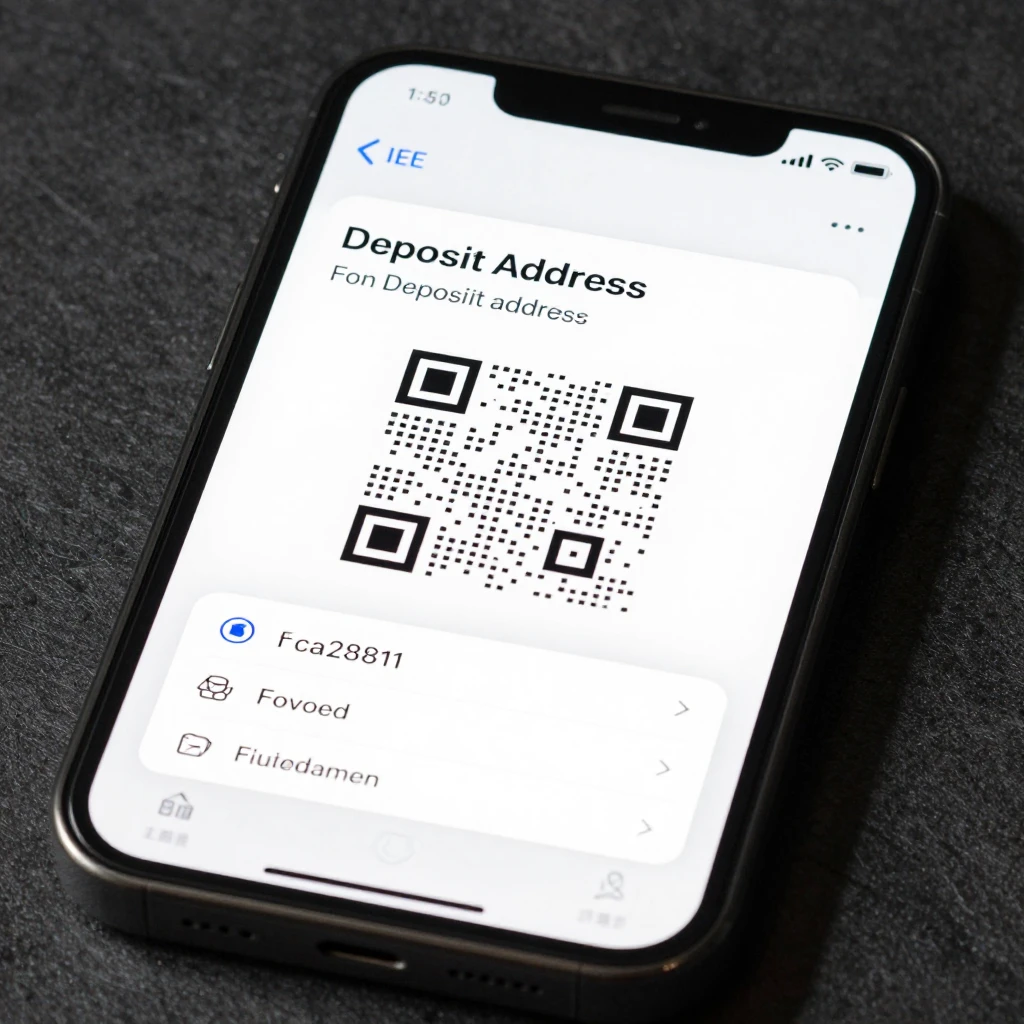
Here's the actual sequence, start to finish. You create an account — usually email and password, sometimes just a username. You go to the cashier and choose a coin and a network. The site generates a deposit address, and you send from either an exchange withdrawal page or a self-custody wallet. Then you wait for confirmations, and the balance credits.
That's it. There's no hidden step. The complexity lives entirely in the details, and the details are where deposits go wrong.
Network Fees, Confirmations, and Why Timing Varies
On-chain Bitcoin still needs block confirmations, and most casinos wait for one to three before crediting. During a fee spike — a big price move, an ordinals craze, a congested mempool — that wait stretches, fees jump, and a 'ten-minute deposit' becomes an hour of refreshing. Lightning is the opposite: it settles in seconds for effectively nothing, which is why so many operators now push it for small deposits. USDT on Tron sits somewhere in between, cheap but dependent on that chain's congestion.
One Canadian-specific wrinkle I see constantly: players route through an exchange first, because that's where their CAD lives. That adds an exchange-side withdrawal hold — sometimes minutes, sometimes a day if the account is new — before a single satoshi reaches the casino. Your deposit clock starts later than you think it does.
Five Deposit Mistakes That Cost Players Money
- Wrong network selected. Send BTC on one chain to an address expecting another and the funds are usually gone — always match coin and network.
- Underpaid fee. A fee set too low can leave a transaction stuck for hours; use the site's recommended setting rather than the cheapest option.
- Sending from a contract address. Some exchange and smart-contract wallets produce deposits the casino can't attribute — withdraw to a plain wallet first.
- Skipping the memo or tag. Where a tag is required, omitting it strands your deposit in a shared pool awaiting manual recovery.
- Depositing before KYC is cleared. Play first, verify later, and you may find your withdrawal frozen at exactly the wrong moment.
Provincial Rules — What Actually Changes Where You Live
I want to be straight with you here, because this is where most articles get vague and hand-wavy. Canada has no single national regulator for online casino play. Gambling is provincially governed, which means the rules change when you cross a border, and 'it's legal in Canada' is not a meaningful sentence on its own.
The practical reality is that most crypto casinos serving Canadians are offshore operators. They sit outside provincial licensing regimes entirely. That doesn't automatically make them shady — but it does mean your recourse if something goes wrong is limited. You're relying on the operator's reputation and their own dispute process, not on a regulator you can escalate to. 'Legal to access' and 'regulated' are two very different claims, and I'd encourage you to keep them separate in your head.
Ontario and the iGO-Registered Market
Ontario is the outlier. It runs a regulated iGaming market with registered operators overseen by iGO and the AGCO, and registered sites operate under strict rules on payment methods, advertising, and player protections. Crypto deposit rails are heavily restricted in that environment, which is why an Ontario player sees a noticeably different product set than someone in Alberta or Nova Scotia. If you're in Ontario, the registered market is genuinely the safer lane — narrower, but with a regulator behind it.
The Rest of the Country
Elsewhere, provincial crown corporations dominate regulated play, and enforcement is aimed at operators rather than individual players. British Columbia, Alberta, Quebec, and the Atlantic provinces each approach it slightly differently, and the trend through 2026 has been toward tighter rules rather than looser ones. My advice: check your own province's current position rather than assuming. The landscape moves faster than any general guide can track.
Instant Payouts — Why 'Instant' Rarely Means Instant
'Instant withdrawal' is the most abused phrase in this industry. What it usually means is: once we've finished everything on our side, the blockchain part is fast. But the blockchain part was never the slow bit.
Break a payout into its real components and you get four stages. Internal risk review, where the operator decides whether your account looks suspicious. KYC verification, if it hasn't been done. Blockchain confirmation, which is genuinely fast now. And finally the receiving wallet or exchange's own hold times, over which the casino has zero control. The casino controls the first two. It does not control the last one, no matter what the banner says.
KYC, Withdrawal Limits, and the Verification Bottleneck
Nearly every 'instant' claim is conditional on a fully verified account. Limits are usually tiered — a lower ceiling before verification, a higher one after, sometimes a third tier for high rollers. And here's the pattern worth internalising: your first withdrawal is almost always slower than your fifth. The first one triggers manual review. After that you're a known quantity, and the process gets boringly fast.
Where to Compare Top Bitcoin Casinos
Given all of that, comparison isn't a nice-to-have — it's the only sane starting point. We're talking about dozens of operators with wildly different payout records, licence claims that don't always survive a second look, and bonus terms written to look better than they are. Picking the first site with a big number on the homepage is how people end up frustrated three weeks later.
What you want is a resource that scores operators on things you can check: licensing and jurisdiction, actual withdrawal speed, deposit minimums, bonus terms in plain language, and Canadian payment support. I'd start with a side-by-side look at the top bitcoin casinos before committing funds anywhere, precisely because seeing them ranked against each other exposes the gap between advertising and delivery.
What a Comparison Table Should Actually Show You
- Regulator named, with a licence number you can look up independently.
- Verified payout times drawn from real withdrawals, not the marketing claim.
- Wagering requirements stated as a multiplier, not buried in a bonus page.
- Deposit and withdrawal minimums, in CAD terms.
- Whether CAD is supported directly or you eat an exchange-rate conversion.
Best Practices and Red Flags
Use a dedicated wallet for play, separate from anything holding long-term savings. Test with a small deposit first — a $20 withdrawal tells you more about an operator than a hundred reviews. Keep records, because the CRA treats crypto as a commodity and dispositions can carry tax consequences, and casual gambling wins sit in a grey zone that's worth documenting anyway. Read bonus terms before you opt in, not after. And honestly? Don't reuse an exchange account tied to your identity as your gambling bankroll; keep the rails clean.
Red flags I'd walk away from: no licence information anywhere on the site, withdrawal limits disclosed only in an FAQ footnote, bonuses carrying 60x wagering, and support staff who can't answer a simple payout-timing question without pasting a template. If they can't explain their own cash-out process, assume it isn't good.

Frequently Asked Questions
Is Bitcoin gambling legal in Canada?
It depends on your province. There's no federal online casino regulator, and offshore operators sit outside provincial licensing. Ontario's registered market is the clearest legal framework; elsewhere enforcement targets operators rather than players.
Do I pay tax on crypto casino winnings?
Casual gambling winnings aren't generally treated as taxable income in Canada, but crypto is a commodity — moving, trading, or converting it can trigger capital gains or income treatment. Professional-level activity gets scrutinised differently. Keep records and talk to an accountant.
How long do Bitcoin withdrawals actually take?
Anywhere from ten minutes to several days. Lightning settles in seconds. On-chain depends on the operator's review queue and network confirmations. Your first withdrawal will be the slowest.
Do I need to verify my identity?
At most established sites, yes — especially before a first withdrawal. Unverified accounts typically face lower limits or held payouts.
Can I use Interac alongside crypto?
At some operators, yes, though crypto-first sites often don't support it. Ontario-registered casinos lean on Interac rather than crypto rails.
Which province has the strictest rules?
Ontario, by a wide margin, because it actually operates a regulated iGaming market with enforcement behind it.
Final Take
In 2026 the thing that separates a good crypto casino from a bad one isn't the welcome bonus. Bonuses are cheap to advertise and expensive to actually clear. What separates them is the payout record and the licence — two things that are boring to check and impossible to fake for long.
So run the three checks before you deposit. Confirm what your province actually permits. Understand the deposit mechanics for the specific coin and network you're using. And find evidence of real withdrawal times from real players, not a banner. Do that first, compare a handful of operators side by side, and the rest of the decision gets a lot easier.